Chimpanzee Civil War in Kibale Forest
April 11, 2026Africa is home to some of the world’s most extraordinary wildlife experiences, but few journeys compare to combining the Great Wildebeest Migration with mountain gorilla trekking. These two iconic adventures showcase completely different sides of East Africa’s natural beauty, offering travelers an unforgettable safari that blends thrilling game viewing on the vast savannah with intimate encounters deep inside ancient rainforests. If you are planning your African holiday during the summer months of June, July, August, or September, this combination provides the ultimate opportunity to witness nature at its finest.
Every year, millions of wildebeests, accompanied by zebras and gazelles, undertake one of the longest and most dramatic wildlife migrations on Earth as they move across the Serengeti-Mara ecosystem in search of fresh grazing.
At the same time, the dry season in Uganda and Rwanda creates excellent conditions for trekking through the mist-covered forests to spend an unforgettable hour with endangered mountain gorillas. Experiencing both adventures on one itinerary allows travellers to appreciate the incredible diversity of East Africa, from endless grasslands teeming with predators to lush mountain forests inhabited by one of humanity’s closest relatives.
For many visitors, this safari combination represents the best of both worlds. The migration delivers spectacular wildlife action on a grand scale, while gorilla trekking offers a peaceful and deeply personal wildlife encounter that leaves a lasting emotional impact. Together, they create a journey that is rich in adventure, breathtaking scenery, cultural experiences, and meaningful conservation.
Why Combine the Wildebeest Migration with Gorilla Trekking?
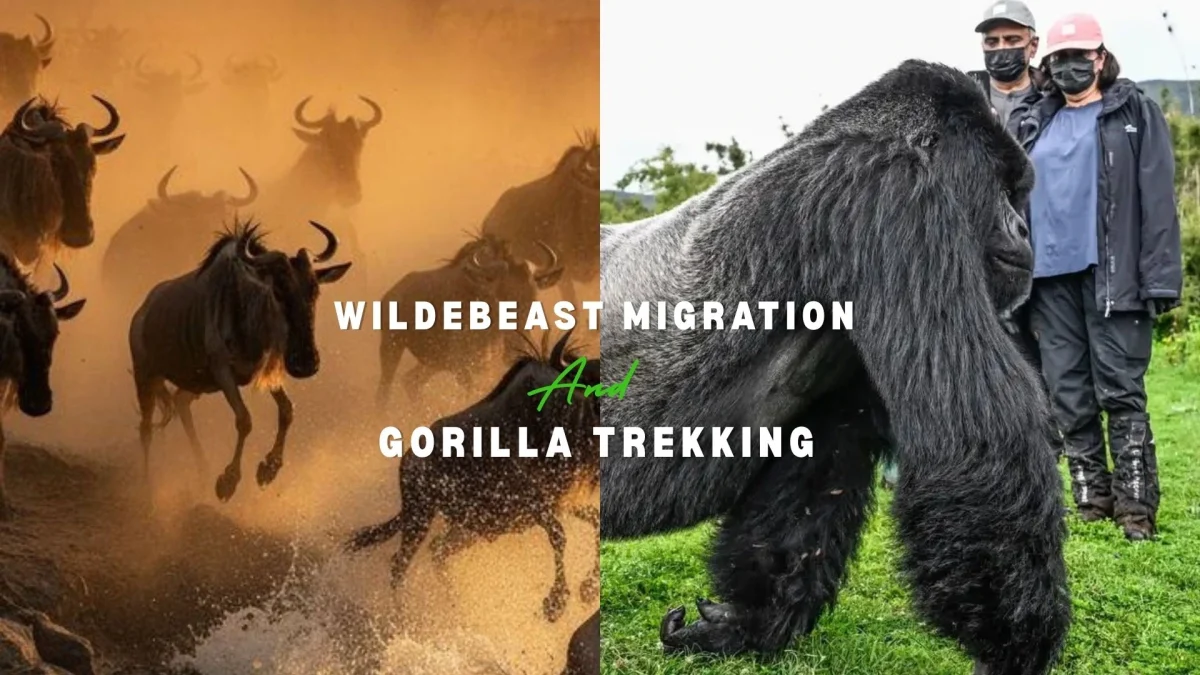
Many travelers struggle to choose between witnessing the Great Wildebeest Migration and trekking mountain gorillas because both experiences consistently rank among Africa’s greatest wildlife adventures.
Fortunately, you do not have to choose one over the other. Thanks to excellent regional flight connections between Kenya, Tanzania, Uganda, and Rwanda, it is entirely possible to combine these iconic experiences into a single itinerary without spending excessive time on the road.
Africa is home to some of the world’s most extraordinary wildlife experiences, but few journeys compare to combining the Great Wildebeest Migration with mountain gorilla trekking. These two iconic adventures showcase completely different sides of East Africa’s natural beauty, offering travelers an unforgettable safari that blends thrilling game viewing on the vast savannah with intimate encounters deep inside ancient rainforests. If you are planning your African holiday during the summer months of June, July, August, or September, this combination provides the ultimate opportunity to witness nature at its finest.
Every year, millions of wildebeests, accompanied by zebras and gazelles, undertake one of the longest and most dramatic wildlife migrations on Earth as they move across the Serengeti-Mara ecosystem in search of fresh grazing.
At the same time, the dry season in Uganda and Rwanda creates excellent conditions for trekking through the mist-covered forests to spend an unforgettable hour with endangered mountain gorillas. Experiencing both adventures on one itinerary allows travellers to appreciate the incredible diversity of East Africa, from endless grasslands teeming with predators to lush mountain forests inhabited by one of humanity’s closest relatives.
For many visitors, this safari combination represents the best of both worlds. The migration delivers spectacular wildlife action on a grand scale, while gorilla trekking offers a peaceful and deeply personal wildlife encounter that leaves a lasting emotional impact. Together, they create a journey that is rich in adventure, breathtaking scenery, cultural experiences, and meaningful conservation.
10 Days Wildebeest Migration and Gorilla Trekking Itinerary
This carefully designed 10 days safari combines two of Africa’s most extraordinary wildlife experiences into one seamless journey. The adventure begins in Uganda with a fly-in gorilla trekking safari to Bwindi Impenetrable National Park, allowing you to maximize your time in the rainforest while minimizing long road transfers.
After your unforgettable encounter with mountain gorillas, you continue to northern Tanzania to witness the Great Wildebeest Migration across the vast plains of the Serengeti before concluding your journey in Arusha. This itinerary offers an ideal balance of adventure, comfort, spectacular scenery, and unforgettable wildlife encounters.
Day 1: Arrival in Entebbe – Fly to Bwindi Impenetrable National Park
Upon your arrival at Entebbe International Airport, you will be welcomed by your safari guide and transferred to the domestic terminal for your scheduled flight to Kihihi or Kisoro Airstrip, depending on your lodge location. The scenic flight offers breathtaking aerial views of Uganda’s rolling hills, lush forests, crater lakes, and rural landscapes before landing near Bwindi Impenetrable National Park.
After landing, your driver-guide transfers you to your forest lodge, where you can relax and enjoy the tranquil surroundings overlooking one of Africa’s oldest rainforests. The remainder of the afternoon is free to unwind, take in the sounds of the forest, or enjoy the lodge’s panoramic views while preparing for the exciting gorilla trekking adventure awaiting you the following morning.
Day 2: Gorilla Trekking Experience in Bwindi Impenetrable National Park
After an early breakfast, you will proceed to the park headquarters for a comprehensive briefing conducted by Uganda Wildlife Authority rangers. During the briefing, visitors are assigned to one of the park’s habituated gorilla families based on fitness level and group size before beginning the trek into the dense rainforest.
The trek itself is an adventure, taking you through ancient forest, across small streams, and up forested slopes in search of your assigned gorilla family. Depending on the gorillas’ location, the hike may last anywhere from one to six hours. The reward comes when you finally encounter the gorillas in their natural habitat. For one magical hour, you will quietly observe the family as they feed, groom one another, play, and interact under the watchful eye of the dominant silverback. Few wildlife experiences compare to the emotion of standing just a few meters away from these gentle giants in the wild.
After the trek, return to your lodge for lunch and spend the remainder of the day relaxing while reflecting on one of Africa’s most unforgettable wildlife encounters.
Day 3: Waterfall Hike, Community Experience and Forest Exploration
Today offers an opportunity to discover another side of Bwindi beyond its famous gorillas. After breakfast, enjoy a guided nature walk through the forest to one of Bwindi’s beautiful waterfalls. Along the trail, your guide will introduce you to the rich biodiversity of the rainforest, pointing out colorful birds, butterflies, medicinal plants, and unique tree species that make this UNESCO World Heritage Site one of Africa’s richest ecosystems.
Later, visit a nearby community to experience the traditions and daily life of the people who have lived alongside Bwindi Forest for generations. Depending on your interests, this may include a traditional coffee experience, local crafts, cultural performances, or a visit with the Batwa community, whose history is closely connected to the forest. These activities provide meaningful insight into how tourism supports local livelihoods while enhancing conservation efforts.
Day 4: Fly Back to Entebbe – Connect to Tanzania
Following breakfast, transfer to the nearby airstrip for your scheduled return flight to Entebbe. Upon arrival, connect with your international or regional flight to Kilimanjaro International Airport in northern Tanzania. After completing arrival formalities, your Tanzanian safari guide will welcome you and transfer you to your lodge in Arusha, where you can relax and prepare for the next chapter of your East African adventure.
Day 5: Arusha to Serengeti National Park
After breakfast, depart Arusha for the legendary Serengeti National Park, traveling through the beautiful landscapes of the Great Rift Valley and the Ngorongoro Conservation Area before descending onto the endless Serengeti plains. As you enter the park, your first game drive begins immediately, offering opportunities to spot elephants, giraffes, zebras, antelopes, lions, and numerous other wildlife species.
By late afternoon, arrive at your safari lodge or luxury tented camp, perfectly positioned within the migration zone. As the sun sets over the African savannah, enjoy dinner while listening to the sounds of the wilderness surrounding your camp.
Optional Flight to Serengeti available on request.
Day 6: Full-Day Great Wildebeest Migration Safari
Spend an entire day exploring the Serengeti in search of the Great Wildebeest Migration. Depending on the season and herd movements, your guide will position you in the areas offering the best opportunities to witness massive concentrations of wildebeests, zebras, and gazelles moving across the plains.
Throughout the day, you will also encounter predators that closely follow the migration, including lions, cheetahs, leopards, hyenas, and jackals. Every game drive offers unique wildlife sightings, making each moment an exciting adventure. Picnic lunch is enjoyed in the heart of the park before continuing your afternoon safari until sunset.
Day 7: Northern Serengeti – Mara River Crossings
Today focuses on one of Africa’s greatest wildlife spectacles: the Mara River crossings. During the migration season, thousands of wildebeests gather along the riverbanks before making the dangerous decision to cross crocodile-filled waters in search of fresh grazing.
Although nature offers no guarantees regarding the exact timing of each crossing, spending a full day in Northern Serengeti significantly increases your chances of witnessing this dramatic event. Even when crossings are not taking place, the surrounding area provides exceptional wildlife viewing with elephants, lions, giraffes, crocodiles, hippos, and abundant birdlife.
Day 8: Serengeti Exploration
Continue exploring different regions of the Serengeti as your guide follows the movements of the migrating herds. The flexibility of today’s schedule allows your guide to adjust the route based on recent wildlife sightings, ensuring the best possible safari experience.
This additional day in the Serengeti also provides opportunities for photographers to capture the region’s breathtaking landscapes and extraordinary wildlife under varying lighting conditions while enjoying a slower pace that allows you to truly appreciate the beauty of Africa’s most famous national park.
Day 9: Serengeti to Ngorongoro Conservation Area
After a final morning game drive in the Serengeti, begin your journey toward the Ngorongoro Conservation Area. Along the way, enjoy more wildlife sightings before arriving at the crater rim in the afternoon. The breathtaking panoramic views over the world’s largest intact volcanic caldera provide a spectacular conclusion to your Serengeti experience.
Spend the evening at a lodge overlooking the crater while preparing for your final safari day.
Day 10: Ngorongoro Crater Safari – Departure
Following an early breakfast, descend into the Ngorongoro Crater for an unforgettable half-day safari. The crater supports one of Africa’s highest concentrations of wildlife, including elephants, buffaloes, lions, hippos, hyenas, zebras, wildebeests, and the rare black rhinoceros. The lush crater floor offers remarkable wildlife viewing within a relatively small area, making it one of Tanzania’s premier safari destinations.
After your crater game drive and lunch, begin the return journey to Arusha or Kilimanjaro International Airport, bringing your extraordinary East African safari to a close. As you depart, you carry home unforgettable memories of standing face-to-face with endangered mountain gorillas and witnessing one of nature’s greatest wildlife migrations—two iconic experiences that together define the very best of an African summer safari.
Wildebeest Migration
Gorilla Trekking Experience

The Great Wildebeest Migration is the world’s largest land animal migration and one of nature’s most extraordinary wildlife spectacles. Each year, more than 1.5 million wildebeests, accompanied by hundreds of thousands of zebras and gazelles, travel in a continuous circular route across Tanzania’s Serengeti National Park and Kenya’s Maasai Mara National Reserve. Driven by seasonal rainfall and the search for fresh grazing and water, the herds cover hundreds of kilometers while facing constant threats from predators such as lions, cheetahs, hyenas, leopards, and Nile crocodiles.
Rather than being a single event, the Great Migration is a year-round journey that follows the changing seasons. One of its most dramatic moments occurs between July and September, when the herds reach the Mara River and make perilous crossings through crocodile-infested waters in search of greener pastures. These breathtaking crossings, combined with the sheer number of animals moving across the plains, make the Great Wildebeest Migration one of the most sought-after wildlife experiences and a highlight of any East African safari.
Gorilla trekking is a guided wildlife experience that allows visitors to hike through tropical rainforests in search of endangered mountain gorillas in their natural habitat. Led by experienced park rangers and trackers, small groups venture into protected forests such as Bwindi Impenetrable National Park and Mgahinga Gorilla National Park in Uganda, or Volcanoes National Park in Rwanda, to locate one of the habituated gorilla families. Once the gorillas are found, visitors are permitted to spend one unforgettable hour observing their natural behavior from a safe distance.
Unlike a traditional game drive, gorilla trekking is an immersive adventure that combines hiking, wildlife conservation, and a deeply personal encounter with one of humanity’s closest relatives. Watching a dominant silverback protect his family, playful infants tumbling through the vegetation, and mothers caring for their young is a truly humbling experience. With fewer than 1,100 mountain gorillas remaining in the wild, every gorilla trekking permit directly contributes to their conservation and supports the local communities living alongside these remarkable primates.
Why Combine the Wildebeest Migration with Gorilla Trekking?
Many travelers struggle to choose between witnessing the Great Wildebeest Migration and trekking mountain gorillas because both experiences consistently rank among Africa’s greatest wildlife adventures. Fortunately, you do not have to choose one over the other. Thanks to excellent regional flight connections between Kenya, Tanzania, Uganda, and Rwanda, it is entirely possible to combine these iconic experiences into a single itinerary without spending excessive time on the road.
The beauty of this safari combination lies in its incredible diversity. One moment you are watching thousands of wildebeests race across open plains while lions patiently stalk their prey, and just a few days later you are quietly standing a few meters away from a silverback gorilla as he watches over his family in the dense rainforest. Very few destinations in the world offer such dramatically different wildlife encounters within the same vacation.
Combining these experiences also provides exceptional value for travelers seeking a complete East African safari. Rather than focusing on only one ecosystem, you explore several of the region’s most celebrated national parks and protected areas. Along the way, you encounter an astonishing variety of wildlife, landscapes, birdlife, and local cultures that together create a far richer and more rewarding safari experience than either destination could offer on its own.
Best Time for This Tour Combination
The best time to combine gorilla trekking in Uganda with the Great Wildebeest Migration in Tanzania is during the dry season from June to September. This period offers ideal trekking conditions in Bwindi Impenetrable National Park while coinciding with the migration’s most dramatic phase in the northern Serengeti, including the famous Mara River crossings.
The drier weather makes gorilla trekking more comfortable, with forest trails that are generally easier to navigate and better visibility for photography. In Tanzania, wildlife viewing is exceptional as vast herds of wildebeests and zebras move across the Serengeti, attracting predators such as lions, cheetahs, and crocodiles. The combination of excellent weather, abundant wildlife, and breathtaking scenery makes these months the perfect time for this safari.
As this is East Africa’s peak safari season, gorilla permits, accommodations, and regional flights are in high demand. Booking your tour several months in advance is highly recommended to secure your preferred travel dates and enjoy this unforgettable safari experience.
→ 1. Can I combine gorilla trekking and the Wildebeest Migration in one trip?
Yes. Combining gorilla trekking in Uganda with the Great Wildebeest Migration in Tanzania is one of the most popular East African safari itineraries. With regional flights connecting Entebbe and Kilimanjaro, it is easy to experience both adventures in a single 10-day safari.
→ 2. What should I pack for this tour?
Packing for this safari requires clothing suitable for both the rainforest and the African savannah. For gorilla trekking, bring sturdy waterproof hiking boots, long trousers, a long-sleeved shirt, gardening gloves for gripping vegetation, a lightweight rain jacket, and a small backpack for water and snacks. For your Tanzania safari, pack lightweight, neutral-colored clothing, a wide-brimmed hat, sunglasses, sunscreen, comfortable walking shoes, binoculars, and a camera with extra batteries or memory cards. Since temperatures can be cool in the mornings and evenings, a light fleece or jacket is also recommended.
→ 3. When is the best time to book this tour?
The best time to travel is between June and September, when gorilla trekking conditions are excellent and the migration reaches the northern Serengeti, often featuring the dramatic Mara River crossings. Booking at least six months in advance is highly recommended, especially if you plan to travel during July or August.
→ 4. Is gorilla trekking physically demanding?
Gorilla trekking involves hiking through mountainous rainforest, and the duration can range from one to six hours depending on the location of the gorilla family. A reasonable level of fitness is helpful, but park rangers adjust trekking groups based on visitors’ fitness levels whenever possible.
→ 5. How close can I get to the gorillas?
Once the gorillas are located, visitors are required to maintain a minimum distance of 7 meters (23 feet) to help protect them from human diseases. However, gorillas are wild animals and may occasionally move closer on their own while rangers ensure the encounter remains safe and respectful.
→ 6. Can this itinerary be customized?
Absolutely. The itinerary can be tailored to your travel dates, budget, preferred accommodation, and interests. Additional experiences such as chimpanzee trekking, a hot air balloon safari in the Serengeti, or a visit to the Ngorongoro Crater can also be included.
→ 7. What wildlife will I see besides gorillas and wildebeests?
In addition to mountain gorillas and the migrating herds, you can expect to see lions, elephants, leopards, cheetahs, giraffes, zebras, buffaloes, hippos, crocodiles, hyenas, numerous antelope species, and an incredible variety of birds throughout the safari.
→ 8. What visas do I need for this tour?
For this itinerary, you will generally need visas for Uganda and Tanzania, depending on your nationality. If your trip begins in Uganda and continues to Tanzania, you will enter each country separately and should ensure you meet their respective visa requirements before traveling.
Many travelers are eligible to apply for both visas online before departure, making the process quick and convenient. It is advisable to check the latest visa requirements for your nationality well in advance of your trip, as entry regulations may change. Your tour operator can also provide guidance on the required travel documents to ensure a smooth journey